Ep. 3: Dishonest Abe
How justice was served, thanks to Jennie Becker's undigested party snacks and a less-than-reputable auto mechanic.
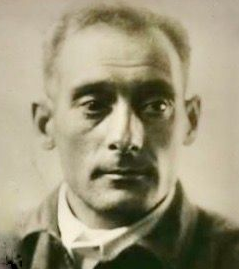
On Saturday, April 8, 1922, Abraham Becker walked into a Bronx police station and reported that his wife, Jennie, was missing. She had left home the day before, but it wasn't like Jennie to just disappear. Abe Becker was worried.
Becker's report was referred to the Missing Persons Bureau, where it landed on the desk of Detective John Waterhouse. The detective paid a visit to Abe Becker later that night at his apartment on East 150th Street, interested to learn the circumstances surrounding the young housewife's disappearance.
According to Becker, he and his wife has attended a party at the home of their friends, Mr. and Mrs. Linders, on Thursday evening. A good time was had by all, and after driving home from the party, the Beckers went to bed.
"Yesterday morning, we both got up, and I went to work as usual," said Becker to Detective Waterhouse. I'm a driver, you see, for a company that sells fireproof doors. I came home for lunch, but Jennie wasn't home. She hasn't been home since."
Abe Becker could think of no reason why his wife might've left home. When asked about Jennie's previous relationships, Becker recalled that there was one man she used to talk about but admitted that he had never paid much attention. What's past is past, and Abraham Becker preferred not to hear about Jennie's former flames.
Det. Waterhouse took down a description of the missing woman. 32 years of age, dark hair, five feet two inches in height, weight, about 125 pounds. Waterhouse didn't have much to go on-- the same description might fit thousands of women in New York, and so it was no surprise that weeks went by without any progress in the case. Det. Waterhouse compared Jennie's description to the unknown suicide victims in the morgue, to the hospital admissions of wandering amnesiacs, but there never was a close match.
Weeks turned to months, and in late September-- five months after Abe Becker reported his wife as missing-- Det. Waterhouse decided to have Becker take a look at a gruesome rogue's gallery-- photographs of the city's unidentified dead-- the women whose lifeless bodies had been found in dark alleys, skimmed from the river, pulled from the wreckage of car crashes and apartment fires. Armed with this gory photo album, the detective went to the East 150th Street address unannounced-- and learned from the landlord that Becker had moved out not long after his wife had vanished.
Tracking down Abe Becker proved exceedingly difficult. He had moved multiple times during the previous year, from the Bronx to Coney Island and back to the Bronx again. Detective Waterhouse thought it strange that Becker had failed to provide him with his change of address. Why, it was almost as if he had no expectation that his wife would be found. And he found another thing strange as well...
While poking around two of Abe's previous addresses, Waterhouse had learned that Abe had been living with a woman described by neighbors simply as "Mrs. Becker". Naturally, the detective wanted to know what this woman looked like. The new Mrs. Becker, he learned, was not in her 30s but in her 20s, and her hair wasn't dark, it was light blonde.
Detective Waterhouse eventually managed to track down Abe Becker, and he charged him with neglecting to notify authorities of change of address. Becker apologized and said that he didn't know that he had such a duty-- especially since he had heard from his missing wife.
"I talked to Jennie, and she was all right," said Becker. "The day after I talked to you, I received a telegram from her. It was sent from Philadelphia. I also received a letter from Philadelphia two days later." Detective Waterhouse asked Abe to produce the letter, but he explained that he had thrown it away.
"But I can recite it word for word," he added.
"Dear Husband Abe. This is to inform you that I have gone away with another man whom I was married to before I married you. He said he would have me arrested as a bigamist if I didn't do as he told me. I hope you will be happy. Signed, your ungrateful wife, Jennie."
"Tell me, Mr. Becker, who is this woman you're living with now?" asked the detective.
"Her name is Anna Elias, and we want to get married. I'm not sure how to get a divorce from Jennie, detective, but I certainly intend to find out."
When Detective Waterhouse left the apartment, he wasn't quite convinced that the Missing Persons Bureau should close the case. He had no proof that Jennie Becker was no longer missing. He conferred with Detective Lieutenant Henry Bruckman about the case, and Bruckman shared the same opinion. In fact, he had suspicions that Jennie might never have left the Bronx in the first place.
"I'm going to let you in on something, John. In the last few weeks, a handful of people from Becker's old neighborhood have gone to the District Attorney about Jennie. They feel that something is very wrong, but they just don't seem to know what it is."
Later that afternoon, Bruckman and another detective, James McCarton, revisited their file on Jennie Becker and decided to track down the mysterious telegram that Abe claimed to have received. But much to their surprise, they found that a telegram had indeed been sent to Abe Becker from a Philadelphia telegraph office on Broad Street.
Det. Lt. Bruckman wasn't ready to give up, however. Next, he investigated the relationship between Abe Becker and Anna Elias, and learned that they had first met in August of 1919, when Abe was supposedly happily married to Jennie. Abe and Anna were riding a bus together on Coney Island, and Abe had told her that he was single and unattached. In January of 1920, Abe Becker, using the last name of Beck, had secured a marriage license and was set to marry Anna at the home of one of her relatives when one of Anna's sisters interrupted the ceremony and accused Abe of being a no-good worthless lout.
Undeterred, Abe and Anna eloped to Cleveland a few days later. There, they shared an apartment together-- until the real Mrs. Becker showed up on their doorstep and dragged Abe back to New York. Later that year, Anna Elias gave birth to Abe's child.
On November 26, 1922, detectives conducted two interviews, which would have a significant impact on unraveling the mystery of Jennie Becker's disappearance. One of the witnesses interviewed was a proprietor of a store in Becker's old neighborhood in the Bronx.
"I saw Becker at seven o'clock on the morning his wife left him," stated the storekeeper. "He passed my store, called out good morning, and then he said, 'Congratulate me! I finally got rid of my wife!"
The second interview was with Harry Monstein, who had shown up at the police station in a state of high agitation. He had heard the rumors about Jennie's disappearance and wanted to set the record straight. According to Monstein, on the day after Jennie allegedly abandoned her husband, Abe had asked Monstein to accompany him to Philadelphia. He wanted Monstein to send a telegram and mail a letter, supposedly from Jennie. Harry Monstein did precisely as he was instructed.
Detective Lt. Bruckman had heard enough. Abe Becker was immediately picked up and brought in for questioning before Bronx County Assistant District Attorney Albert Cohn. Becker clung to the same story he had originally told to Detective Waterhouse, but it was noted that there was one peculiar inconsistency: Becker couldn't account for what had transpired from the time he and Jennie left the party at the Linders' home on the night of Thursday, April 6, and the Friday morning of April 7, when he had told the shopkeeper that he had gotten rid of his wife.
Detectives needled Abe on this point, demanding the most minute details of those mysterious hours. Which route had he taken to get home? Did they stop anywhere? Did they speak to anyone? Becker began fumbling for answers; the questions were coming faster than his mind could work out a lie. Finally, after hours of relentless grilling, he blurted out:
"Yes! We stopped for a little while at Reuben Norkin's repair shop at 140th and Southern Boulevard. Then we went home."

By this point in the interrogation, it was after midnight. Becker was drained and drenched with sweat. The guards returned him to his cell.
Early the next morning, Detective McCarton drove to 140th Street and Southern Boulevard to quiz Reuben Norkin, owner of the Arrow Automobile Repair Shop. Norkin admitted that he was friends with Abe Becker, but he had no recollection of seeing him or Jennie on that night. On his way out the door, Detective McCarton noticed that the auto repair shop bordered a large lot strewn with rubble and trash. Norkin told the detective that a building had once stood on the spot. This gave McCarton an idea-- but he would need the help of the man who had sent the letter and telegram from Philadelphia.
A few hours later, after being coached by detectives, Harry Monstein was admitted to Abe Becker's cell. Unbeknownst to Becker, the adjoining cells were occupied by Det. Lt. Bruckman and a police stenographer.
After a few minutes of small talk, Monstein brought up Mrs. Becker.
"Where is she, really, Abe?" he asked.
"Someplace where the police will never find her. Mark my words, Harry. They'll never find Jennie."
"Oh, I don't know about that, Abe. you didn't hear it from me, but the police are digging at 140th Street, right next to Norkin's shop."
"Oh? Well, if they find Jennie there, then that proves that it was Norkin who killed her!"
Within minutes, detectives were back at Norkin's shop, equipped with excavating equipment. When Norkin was told that Becker had fingered him as Jennie's killer, the auto mechanic turned red with anger.
"That dirty double-crosser! Oh, yes, Detective, Jennie's out there all right, and I'll show you exactly where to find her! But I wasn't the one who killed her. It was Abe, and he buried her, too. All by himself."
Norkin pointed to a spot, and the men began to dig. Almost instantly they struck a canvas tarp. And beneath the canvas they found Jennie Becker.
In the office of District Attorney Cohn, Norkin and Becker took turns accusing the other of the heartless slaughter. Becker claimed that Norkin killed Jennie because she had threatened to tell Norkin's wife about his many mistresses. Then Reuben Norkin told his version of what had happened:

"Becker planned to kill Jennie for eleven months, so that he could be with Anna. After they left the party that night, he drove to my shop. When he got out of the car, he lifted the hood and told Jennie there was something wrong with the motor. When she came to take a look, she leaned over and Abe hit her with an iron bar. Then he dragged her over to the edge of the pit he'd dug earlier that day and pushed her in. I stood watch while he filled in the hole. He gave me a hundred bucks for helping him."
Abe Becker, of course, was charged with his wife's murder, but he made one desperate attempt to extricate himself from his dilemma-- by claiming that the body found under the tarp wasn't that of Jennie Becker. He pointed out that the dental work didn't match, that the clothing wasn't the right size, but it was city toxicologist Dr. Alexander Gettler who made a positive identification based on an analysis of the contents of the dead woman's stomach. Evidently, just hours before she died, she had eaten oranges, almonds and raisins-- the same snacks the Linders had put out for their party guests.
On December 5, 1922, a grand jury returned a joint indictment against Becker and Norkin for first degree murder. After a long and sensational trial, Abraham Becker was found guilty on Christmas Eve. Norkin's conviction would come a few weeks later. Both men were sentenced to death. Becker died in the electric chair on December 14, 1923, and Norkin on April 17, 1924.

While in prison awaiting his execution, Becker never expressed remorse. He remained bitter right up to the very end. As he was led to the death chamber at Sing Sing Prison, he made a final statement: "If there is another world, and if I have any influence there, I'm going to do something to District Attorney Cohn."

Comments